
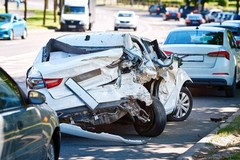
A collision can leave more damage than what shows up on the surface. Crumpled fenders and shattered glass get your attention right away, but the structure underneath, the frame, is what holds your entire vehicle together. When that framework takes a hit, one of the first questions drivers ask is whether it can be saved or whether the car is finished. If you have been searching for answers on auto repair in Seymour, you have probably come across conflicting opinions, so let's clear things up. The honest answer to "can you fix a bent frame on a car" is that it depends on the severity, the type of frame, and how much structural integrity remains.
At JJs Auto Clinic, we have evaluated countless vehicles after accidents, from minor fender benders to serious impacts. Understanding what happens to a frame, how it gets assessed, and what your repair options look like can help you make a confident decision instead of a rushed one. Let's walk through it.
What a Car Frame Actually Does
Your vehicle's frame is the backbone of the entire structure. It supports the engine, the body panels, the suspension, and ultimately protects you and your passengers in a crash. There are two main designs on the road today. Older trucks and some SUVs use a body-on-frame setup, where the body sits on top of a separate ladder-style frame. Most modern cars use a unibody construction, where the frame and body are built as one integrated unit designed to absorb and distribute crash energy.
This distinction matters a lot when damage occurs. A body-on-frame vehicle often has a more forgiving structure for straightening, while a unibody vehicle is engineered with crumple zones that are meant to deform in a specific way during impact. Knowing which type you have is the starting point for any honest frame assessment.
Can You Fix a Bent Frame on a Car?
In many cases, yes. Modern frame repair technology has come a long way, and skilled technicians can straighten frames that would have been considered a total loss decades ago. The key is measurement. Using a frame machine and precise laser or computerized measuring systems, a technician compares your vehicle's current dimensions against the manufacturer's original specifications. This reveals exactly where and how far the frame has shifted.
When the damage is within a repairable range, the frame can be anchored and gradually pulled back into alignment using hydraulic force. The goal is to restore the vehicle to factory specifications so that everything, from the way the doors close to how the wheels track down the road, returns to normal. So when someone asks whether you can fix a bent frame on a car, the real answer hinges on whether the metal can be brought back to spec without compromising its strength.
That said, not every bend is fixable. Severe damage, extensive rust, or bends that have stretched or torn the metal beyond its tolerance may mean the frame cannot be safely restored. In those situations, repair stops being the responsible choice.
Signs Your Frame May Be Bent
Frame damage is not always obvious, especially after what seems like a minor accident. There are several warning signs worth paying attention to, and catching them early can prevent bigger problems down the road.
- Uneven gaps around the doors, hood, or trunk that did not exist before
- The vehicle pulling to one side even when the alignment was recently checked
- Unusual tire wear or tires that wear out faster than expected
- Visible bends, cracks, or wrinkles in the metal underneath the car
- Strange noises, rattles, or a car that just does not feel right while driving
If you notice any of these after a collision, it is worth having a professional inspection. A bent frame affects more than appearance. It changes how your vehicle handles, how it protects you in a future crash, and how evenly your tires and suspension wear.
When Repair Makes Sense Versus Replacement
The decision between repairing and replacing comes down to a few practical factors. Severity is the biggest one. A frame that has shifted slightly out of alignment is usually a strong candidate for straightening. A frame that has been crushed, kinked sharply, or compromised across multiple structural points may be beyond safe repair.
Cost relative to the vehicle's value also plays a role. If the repair expense approaches or exceeds what the car is worth, insurers often declare it a total loss. On a unibody vehicle, replacing an entire frame is frequently impractical because the frame and body are one piece, which can push many severe cases toward total-loss territory. Body-on-frame vehicles sometimes allow for an actual frame swap, though this is a major undertaking.
Safety is the factor that should never be compromised. A frame that has lost its structural integrity cannot protect you the way it was designed to, no matter how good it looks afterward. A reputable shop will always tell you honestly when a repair would be unsafe, even if that is not the answer you were hoping for.
Why Professional Assessment Matters
You cannot accurately judge frame damage by looking at it from the driveway. Some of the most serious structural problems hide beneath intact-looking panels, while some scary-looking dents turn out to be surface damage with a solid frame underneath. That is exactly why precise measurement is so important. A proper evaluation removes the guesswork and tells you where things really stand.
When we assess a vehicle, we look at the whole picture, not just the obvious damage. We check alignment, suspension mounting points, and the condition of the metal itself. This matters because a frame that is pulled back to spec but has developed stress fractures is not truly repaired. Our goal is always to answer the question of whether you can fix a bent frame on a car with real data, not optimism. Drivers throughout Seymour, WI and the surrounding areas rely on that kind of straightforward evaluation before spending money on repairs.
If your vehicle has been in an accident, do not wait to find out. Even if it drives fine, hidden frame damage can worsen over time and create safety risks. A timely inspection protects both your wallet and the people riding with you.
Making the Right Call for Your Vehicle
Deciding what to do with a bent frame is ultimately about balancing safety, cost, and the long-term value of your vehicle. Minor to moderate damage can often be straightened back to factory specifications, restoring both the look and the performance of your car. More severe damage, especially on unibody vehicles, may tip the scales toward replacement or a total-loss determination, and that is a conclusion worth trusting when it comes from an honest assessment.
The most important step is getting an accurate, professional evaluation before making any decisions. Guessing or hoping for the best is never a good strategy when your safety is on the line. A clear measurement of the damage puts the power back in your hands, so you know whether repair is realistic or whether it is time to move on.
If you are dealing with possible frame damage and want a straight answer, the team at JJs Auto Clinic is ready to help. Reach out and schedule a service appointment so we can inspect your vehicle, measure what matters, and walk you through your options with complete honesty. Your peace of mind on the road is always worth the conversation.